


The Truth About Being a New Manager
That No One Tells You. (It isn't on the JD either!)

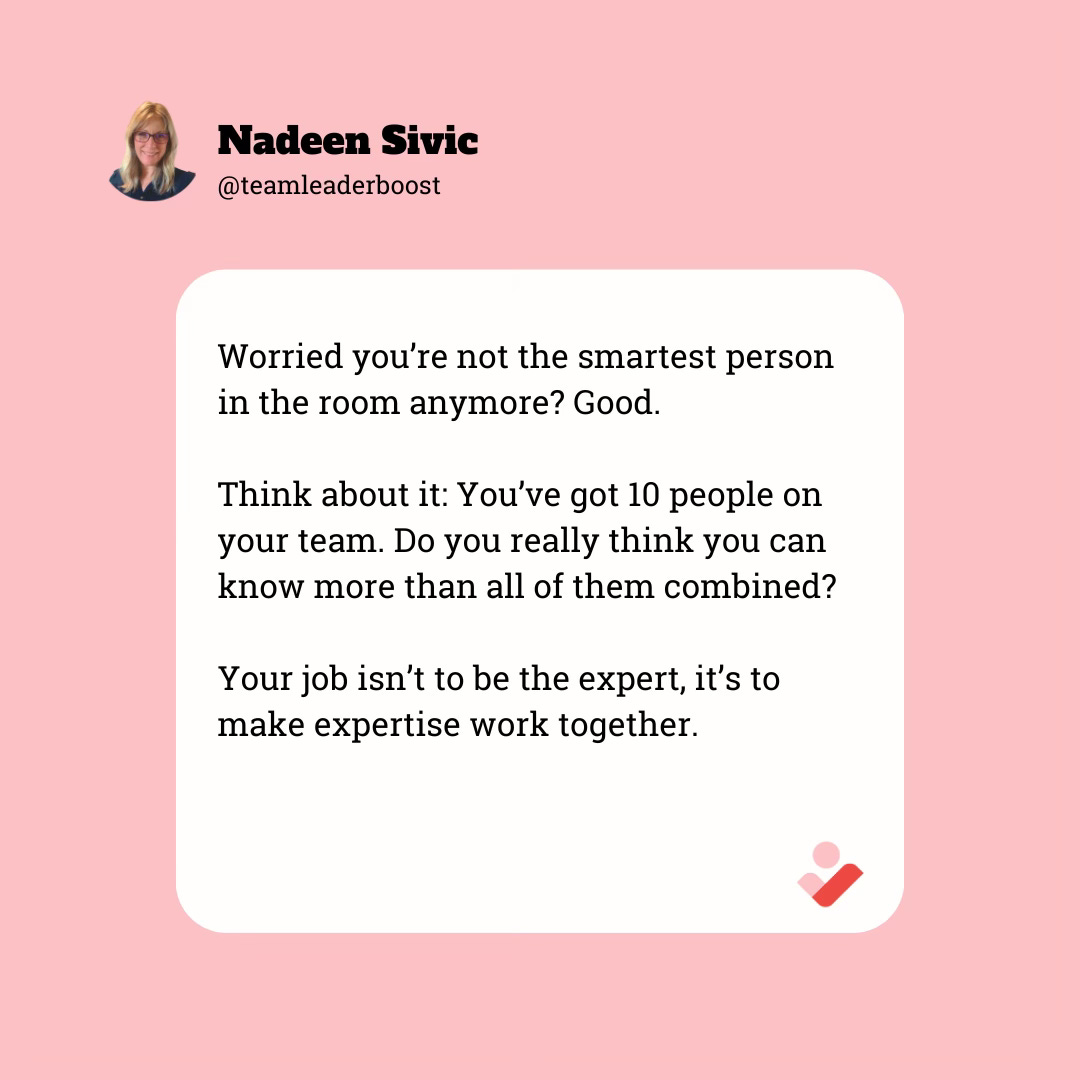
Your job title changed. But did anyone tell you what the job actually is?
If you’ve just been promoted to team leader or manager, you’re probably laser-focused on tasks, projects, and getting things done.
You’re likely spending your days reviewing your team’s work, fixing mistakes, and making sure everything is written, designed, or coded correctly, because you think your job is to catch every error before it reaches the client.
🚨 But here’s the truth: That’s not leadership.
Your real job isn’t perfecting the work, it’s balancing two things: Team Morale and Productivity.
And yet, you won’t see that written anywhere in your job description. Why? Because everyone assumes you already know.
The 3 Pillars of a Team Leader
Being a manager isn’t just about getting work done, it’s about making sure others can get work done. Your skills need to shift from ‘doing’ to ‘leading,’ even in the moshpit, and that means operating across three key areas:
🔹 1. Subject Matter Expertise: The knowledge that got you promoted in the first place.
🔹 2. Management Function: The mechanics of leadership: planning, reporting, processes, and structure.
🔹 3. Team Dynamics: The invisible force that determines whether your team thrives or collapses.
Most new managers double down on the first two, because they feel safe. You know how to do the work. You can write a plan. You can track progress.
But ignore Team Dynamics, and you’ll fail.
By the way, the reason you double down of subject and reporting is likely because your boss doesn’t understand any of this either. And you’ll know this to be true if it’s wasn’t discussed at any point during the promotion process.
Why Team Dynamics Is NOT a Soft Skill
People love calling Team Dynamics a “soft skill.” That’s a mistake.
Because what’s at the heart of team dynamics? Conflict.
And conflict isn’t just a workplace inconvenience, it’s a force that directly impacts morale, engagement, and productivity.
🔹 Unresolved conflict drains morale.
🔹 Low morale kills productivity.
🔹 Poor productivity makes YOU look like the problem.
This is why Team Dynamics isn’t a ‘nice to have’, it’s a leadership survival skill.
Your Next Move as a New Manager
So, what do you do?
First, stop thinking of conflict as ‘bad.’ It’s part of the natural friction of working with people. Your job isn’t to avoid it, it’s to understand it and control its impact.
Second, learn to read team dynamics. Who holds power in your team? Where are the tensions? Who’s disengaging before they quit? If you wait until problems explode, you’ve already lost.
Third, accept that you set the tone. Your team’s morale is a reflection of your leadership. If they’re demotivated, frustrated, or disengaged, fixing it starts with you.
👉 If this hit home, drop a comment: What’s been your biggest challenge as a new team leader?
My biggest challenge as a new team leader was managing a team working on two different products simultaneously. It was difficult to balance priorities, maintain focus, and ensure both products progressed effectively. To overcome this, I found that structuring the team as two sub-teams, each dedicated to one product, helped streamline workflows, improve focus, and drive both projects forward more efficiently.